What does it take for you to trust someone? How much time and work is needed for you to open up or to be ready to really listen?
As Christians, we often make some big assumptions around trust because being trustworthy is something we value highly. There are commandments that we live by that tell us not to lie, we know deception is evil and that leaving out information on purpose is no different than a bald-faced fabrication.
In my work building out a national network of churches, I’ve seen a few who intentionally withhold information and reserve it for their “Get to know us” class or their discipleship pipeline. When I asked them for that information? I was told “No. You can only get that if you come in and attend the class.” which honestly made me feel like I was being “invited to listen to an amazing opportunity to be part of a time-share vacation home.”
I’m sure we’ve all had moments in life where we wanted to get more information about something, but felt like -in the moment- it wasn’t okay to ask or safe to dig deeper. I’m not talking about top-secret information here. It’s not about requesting sensitive information. It’s just normal info that should be available to anyone who asks.
When someone is visiting a church for the first time, one of the main things we need to communicate with them is a consistency in communication. It’s not a big deal to have a weekly email, links to documents or to provide opportunities to ask questions (and get a quick response.)
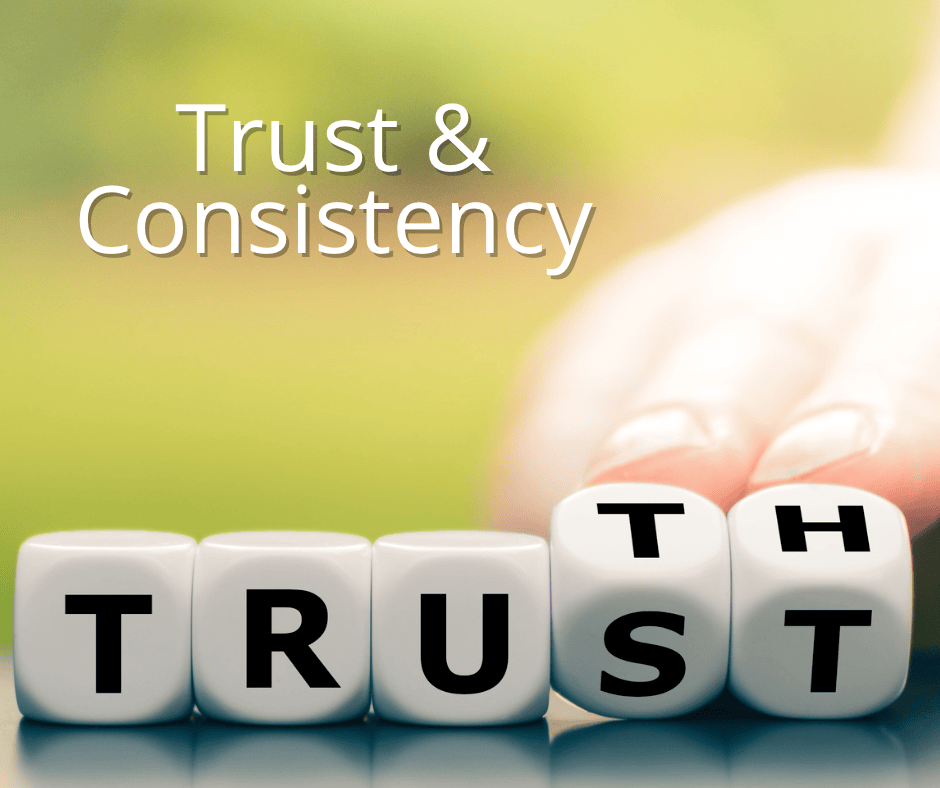
Trust grows through consistency.
This isn’t a revelatory statement. We know this, but the difficulty of being intentional comes from setting our priorities. If we value trust-building and consistency, then we need to schedule it. It needs to be part of our regular routine & set up within our rotation of normal tasks and operations.
When we are transparent /and/ consistent?
- That builds trust.
When people can count on openness and regularity from us?
- The walls we all hold up to keep ourselves safe start to lower.
When people aren’t left assuming things about us or the church?
- Honesty & ownership develop going both ways.
For example, if a church claims to love their community, then both recently completed efforts and next opportunities to do more need to be readily found and advertised.
Ne of the greatest frustrations expressed by the “Nones” and those who would be described as “De-churched” is that churches claim to love their community, but offer little or no tangible opportunities to be regularly involved in their immediate area.
Serving up food baskets once a year is nice, but that’s not regular service. Going on foreign missions, but never connecting members with real needs in their own back yards comes up short. People want to see, hear and be guided toward regular, difference-making opportunities to love their neighbor more than they want LED walls and perfected worship sets.
Public claims need to have a matched reality that are lived out actively & regularly. This is also an exercise in building trust.
“We say we believe this. We communicate this all the time. Join us in doing it…here’s how.”
I’ll say this again:
Trust grows through consistency.
This isn’t a revelatory statement.
We know this, but the difficulty of being intentional comes from setting our priorities.
If we want to build trust, we have to give it the weight in our own schedules that it deserves before we can expect it from anyone else.

